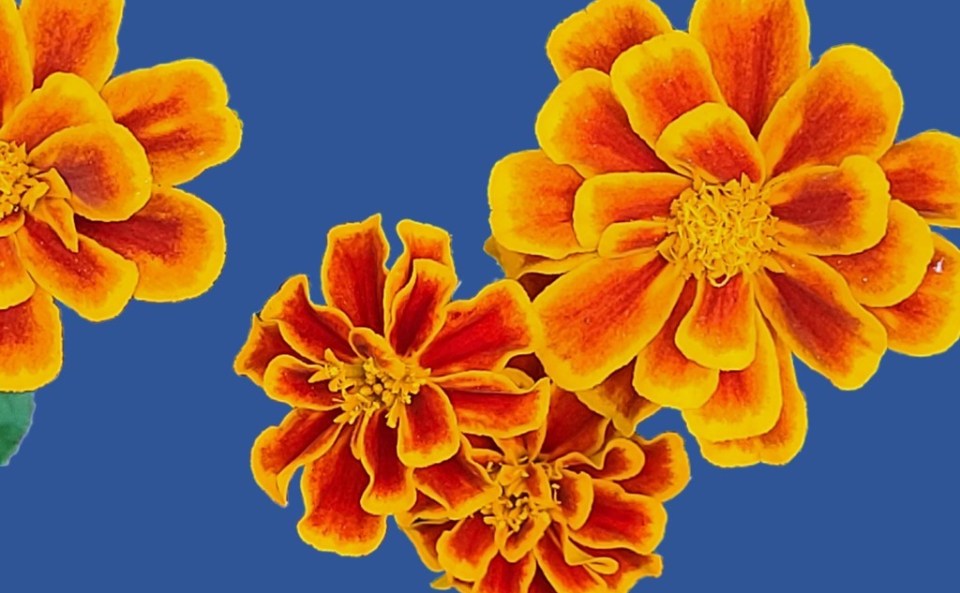
The scent of marigolds is the happy smell of childhood. Not all of childhood, mind you; not the parts when a mother’s sharp blue eyes might have expected too much, the parts with raw sore throats or hot, world-ending tears. But the parts in the sun with my dad’s sure, warm voice explaining how to poke a hole for the seeds in the ground, the pleasure of being allowed to get dirt under my nails and tickle earthworms as they went on their squelchy, wormy way. Gathering the seeds was almost as much fun as watching the thick flower heads open. I loved pinching them out of the flower husk in a fan (still do) and wondered at their shape. Weren’t seeds round, or at least roundish? How could these tiny black and white sheaths contain the beginnings of such bright, warm flowers?
Marigold, from “Mary’s Gold,” a name to please my rosary-murmuring mother. To the Victorians, they symbolized jealousy or grief, depending on the variety; blended with cypress, the implication escalated to despair. It’s hard at first to imagine what the Victorians were thinking. (But then again, this was a culture that memorialized their dead by making trinkets of their hair.) Perhaps it was the scent, more woody and herbal than floral perfume. Perhaps it was their commonness. A marigold, after all, is not elegant like a rose (love), architecturally striking like the bearded iris (flame) or frothy like a peony (bashfulness). Still, despair, grief and jealousy seem rather a lot of baggage to load on those hearty little petals.
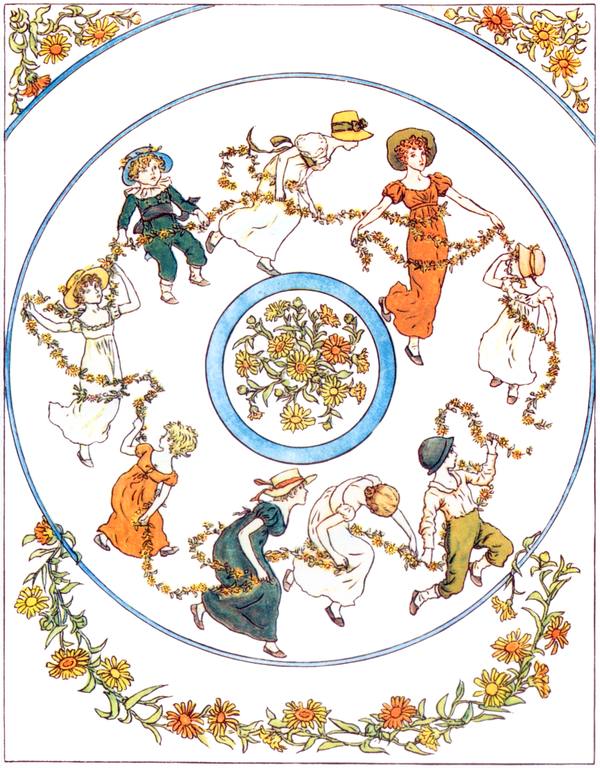
But perhaps it was down to Shakespeare, or at least to persistent cultural associations that are given voice in Shakespeare. When Perdita, undercover princess in The Winter’s Tale, hands out autumnal flowers to guests at her adopted father’s sheep-shearing feast, the marigolds she bestows are full of tears: “The marigold, that goes to bed wi’th’ sun,/And with him rises, weeping.” Dew adorns many blossoms of a morning, not just marigolds, (likely, in this instance, a reference to calendula or “pot marigold,” which exhibits nyctinasty, a process of opening in the morning and closing at night). So it’s unclear why the marigold gets singled out as sleeping and rising “weeping,” but the association seems to stick: the bright orange of joy paired with the daily reminder of human suffering. In a play about restorative cycles – from tragic loss to pastoral growth to seemingly wondrous rejuvenation – it’s a brief observation that reminds us of the common comingling of happiness and pain.
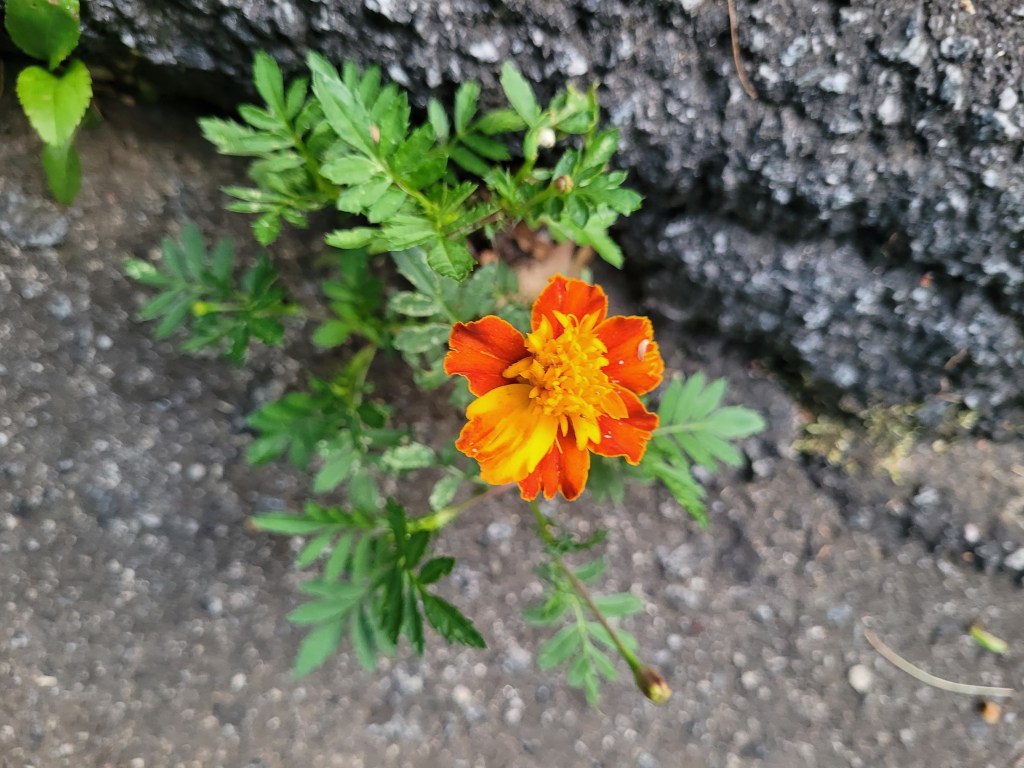
Marigolds are sturdy, persevering little plants. When I was eight, the back of our car got damp. Marigold seeds sprouted in the carpeted upholstery. Early this summer, I found a bud pushing through the pavement outside my front garden: a determined escapee from last summer’s border.
When my dad developed dementia, I brought him marigolds for his windowsill. I told him why I’d brought them, but I don’t know if the memory registered in his shifting map of the past where the childhood I shared with him is often transposed into his own childhood back garden. Still, he always remembers me. Even if sometimes it’s as his younger brother.
But the specifics don’t matter. The basis is always love.
 In the Bee-Loud Glade